


UNMP Reflection
May 18, 2026
UNMP Reflection
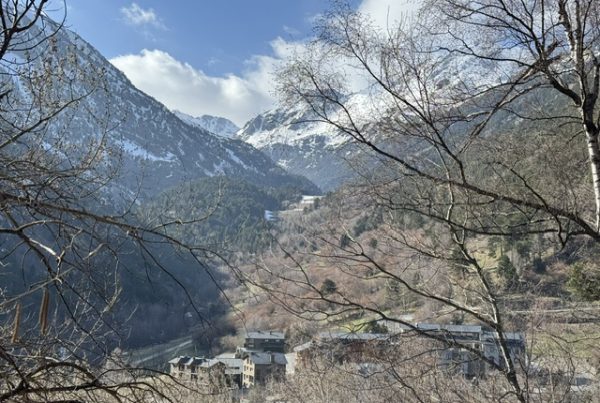
“Mountains Matter” is the tagline for the UN Mountain Partnership (UNMP) Summit, and as I ride up the chairlift at…

The mission of the Telluride Environmental Science and Engineering Laboratory (TESEL) is to conduct research in environmental science and related disciplines to better understand our regional ecosystems and to assess and monitor the effects of environmental stress. The TESEL mission also includes providing our community with accurate and relevant information regarding the environmental and energy challenges it faces, as well as a focus on community resilience in response to climate change.
TESEL capabilities and resources enable R&D and eduction in areas that include: environmental biology and ecological research, environmental sensor/instrumentation development, field research focused on environmental data collection, and climate resilience and small-scale renewable energy.
TESEL continues to address key issues associated with understanding and protecting sensitive ecosystems. This work includes research activities focused on forests and wetlands, with an emphasis on the biology and ecology of those complex systems. With a mix of both fieldwork and laboratory work, TESEL is building a portfolio of projects to enable better understanding and stewardship of our natural environment. The TESEL Sensitive Wetlands Assessment and Monitoring Program (SWAMP) in comprised of four projects currently focused on the fens in Prospect Basin. These projects areVegetation Phenology, Biodiversity, Paleoecology and Vegetation Mapping. Other TESEL environmental projects includeBioElectrical Activity of Fungi, San Juan Mountains Biodiversity Assessment and Monitoring, andForest Health Monitoring using Wireless Sensor Networks.
TESEL also does work focused on climate resilience. Currently this work is directed at creating opportunities related to geothermal energy and exploring the application of smart-city concepts, such as the Internet of Things (IoT), to our small mountain community. TESEL projects in this area include our Geothermal Partnership with the Good Shepherd Ranch, the Telluride Wireless IoT Gateway (TWIG), and aNutritional Supplement Photobioreactor for High-Mountain Environments.
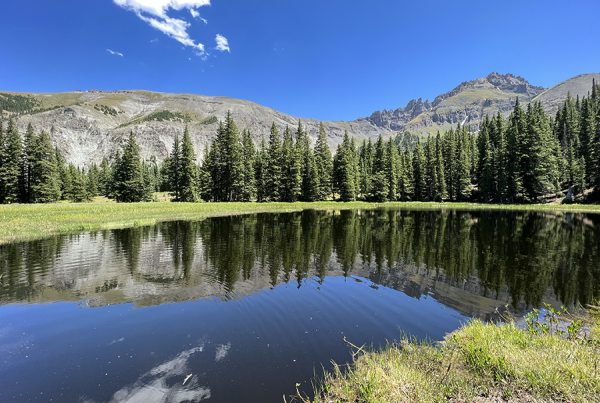
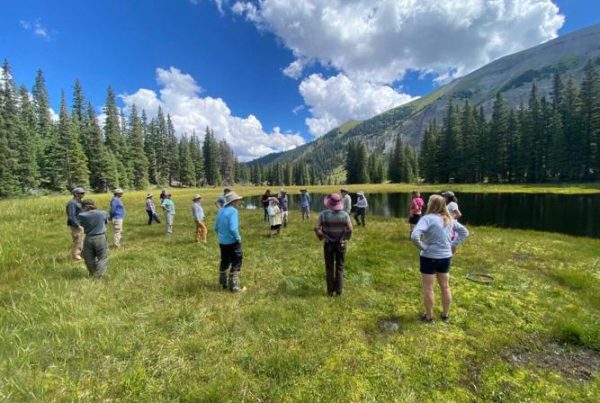
The high-alpine fens located in Prospect Basin above Telluride are a key field site for TESEL research and ecological monitoring. This photo shows a field-data-collection activity for a Master’s of Biology thesis that provided a much greater understanding of the effects of hydrology and microtopography on carbon cycling in mountain fens.
❖ Nutritional Supplement Photobioreactor for High-Mountain Environments
• Spirulina (Arthrospira) is a high-value nutritional supplement that can be very effective for alleviating malnutrition. In tropical and subtropical regions, the climate allows for year-round cultivation using simple techniques. For high elevations in the temperate zones, the climate does not allow these simple growth techniques to be used year round.
– The goal of this project is to design, develop and demonstrate an affordable photobioreactor that can provide year-round nutritional supplements in mountain climates.
– Work so far has produced a preliminary design for a small (family size) photobioreactor. That design is nearly mature enough to enable the construction of a functioning prototype for operation and testing.
• Status
– A partnership to build and test an operational prototype is being sought.
❖ Forest Health Monitoring Wireless Sensor Network
• Sensor Development
– Soil Moisture; Weather; Microclimate; Tree Transpiration, Water Uptake, and Transport
• Trunk Dendrometers, Dielectric Permittivity, Electrical Conductivity, …
• Wireless Sensor Network Development
– Solar PV Energy Harvesting, Data Logging, Wireless Data Transport, Wireless Data Ex ltration
• Status
– Work on this project has been stopped until a suitable partnership and funding can be identified.
❖ Electrical Activity of Fungi
• Recent research has shown that a form of “spiking” electrical activity is present in fungal mycelial networks.
– Analogous to the spiking activity observed in mammalian neural networks and simulated in some types of arti cial neural networks for machine leaning and artificial intelligence
– Electrical activity of fungi is currently a hot research area in mycology.
– TESEL capabilities and resources (pages 7–9) make this an obvious area for a TESEL research project.
• Status
– The current focus is on instrumentation development and laboratory data collection to assess the viability of measurements in the eld.
• Initial instrumentation was developed and tested with mixed results on Oyster Mushrooms (Pleurotus pulmonarius) grown from culture.
– The purchase of some additional laboratory equipment is required to continue work on this project.
❖ Sensitive Wetlands Assessment and Monitoring Program (SWAMP)
• Goal
– Provide baseline characterization and regular monitoring of sensitive wetland ecosystems to help assess stress and impacts of climate change and other factors
• Focus
– Prospect Basin Fens, the Vance Creek / Beaver Pond Lane stream/wetland areas, other regional wetlands, …
• TESEL SWAMP is a multidisciplinary R&D effort to collect and analyze georeferenced environmental data using autonomous field instrumentation and other modern techniques.
– Perform Biodiversity, Biocomplexity and Abundance Assessments of Aquatic and Soil Organisms
• Protists, Fungi, Plants (primarily Bryophytes), Meiofauna and other Invertebrates
• Also, perform targeted assessments of some speci c indicator and/or keystone species
– Develop, Deploy and Operate Wireless Sensor Networks for Environmental Monitoring
• Unattended, in situ spatiotemporal monitoring (data logging) of temperature, humidity, solar ux, soil moisture, soil redox potential, water levels, wind, temperature pro les, …
– Collect and Archive Photographs and Photogrammetric Spectral Imagery
• Georeferenced high-resolution photographs and aerial multispectral imagery
– Paleoecology, Water Chemistry, and other analyses can be performed as warranted
• TESEL SWAMP has now grown to include a portfolio of four complementary projects. These project are described below.
❖ SWAMP Project 1: Vegetation Phenology
• Phenology is a branch of science dealing with relationships between climate and cyclic biological phenomena. Phenology focused on vegetation in sensitive
ecosystems has emerged as an important tool to characterize and monitor impacts due to climate change.
– Phenology data collection is very labor intensive. Therefore, R&D is underway in several laboratories to automate phenology data collection using time-lapse photography throughout the growing season.
– Based on TESEL autonomous eld instrumentation, a phenology camera (“phenocam”) system is currently under development to provide a new capability for automated vegetation phenology data collection.
– If support is provided for this work, Telluride-area phenocams could become part a new international effort to establish a Global Phenocam Network.
• Status
– Preliminary design completed Spring 2024
– Some initial development work started in June 2024
– Major focus for development during the winter and spring
❖ SWAMP Project 2: Biodiversity
• Perform biodiversity inventories with a focus on all ve fens in Prospect Basin
– Establish baseline inventories to enable monitoring changes due to climate and other factors
– To date, the only biodiversity work in these fens has focused on vascular plans in very small study areas near the center of the fens.
• This biodiversity inventory focuses on
– Aquatic Animals (meiofauna and other invertebrates)
– Protists
– Fungi
– Insects, …
– Nonvascular Plants (Bryophytes)
– Vascular Plants
• Status
– Work started in the summer of 2022.
– Protocols have been established and some sample collection has been performed.
– Work on vascular plants was supported by two HS interns in 2023 and 2024.
– Critical need for support by a eld biologist(s) during the eldwork season
❖ SWAMP Project 3: Paleoecology
• Paleoecological microfossil analysis of peat core samples
– Testate amoeba, …
• Infer climatic and hydrological conditions over the past
~12,000 years based on species paleoecological biodiversity
– A secondary goal is to establish a new research opportunity to attract funding and graduate students to continue work in the fens.
• Status
– Peat core samples (shallow) were collected in 2022 and 2023.
– The development of a TESEL capability for microfossil extraction and analysis is underway.
– The purchase of additional laboratory equipment is required to continue work on this project.
❖ SWAMP Project 4: Aerial Vegetation Mapping
• Perform high-resolution spectral imaging — initial focus on the ve fens in Prospect Basin
– Multispectral imagery collection from a multirotor aerial platform (sUAS)
• Spectral bands in the Visible+Near-Infrared and possibly Short-Wave-Infrared (VNIR and SWIR) regions of the spectrum
– Raw imagery collected at a ~10-cm or better resolution (GSD)
– Real-Time Kinematics (RTK) navigation to enable photogrammetric mapping products
• Perform photogrammetric processing and othorecti cation of the imagery and generate high-quality multispectral orthomosaics
• Generate vegetation maps and other map products
– These baseline map products will enable detailed assessment and monitoring
• Status
– Requirements and plans were drafted in fall 2023.
– A Photogrammetric Multispectral Mapping System (PMMS) was purchased in June 2024 using community grant funding. (DJI Mavic 3 Multispectral sUAS with RTK)
– Extensive initial data collections were performed during July and August 2024. These collections covered all ve fens (~10 acres each) multiple times at a resolution (GSD) of about 1 inch. Imagery has 7 bands {RGB + Green, Red, NIR and Red-Edge}.
❖ Telluride Wireless IoT Gateway (TWIG)
• Investigate adapting Smart City Concepts to a small mountain community by providing an Internet of Things (IoT) infrastructure for climate resilience and many other uses
– TWIG was a project initiative undertaking in response to a request from the Telluride Foundation for projects to help address Climate Resilience.
• Project Plan
– Install and operate a LoRaWAN IoT Gateway in downtown Telluride
• To enable demonstrations, application exploration, and free wireless IoT access for Telluride
• Staff the TWIG project with several motivated high-school students (PBL Interns)
– TWIG Phase I — Design, develop and test a basic TWIG implementation
– TWIG Phase II — Build and install a robust LoRaWAN Gateway in downtown Telluride, Develop applications software, Perform community outreach, Provide application support, …
• Status
– A TWIG white paper was written and circulated (15 April 2023)
• Statements of Work and Cost Estimates for Phase I and Phase II were generated
– After a ~6-month fundraising campaign, TWIG Phase I began in November 2023.
• TWIG Phase I was completed in June 2024.
– TWIG Phase II was cancelled due to lack of funding.
An R&D laboratory with the capabilities and resources required to execute regional environmental and energy projects.
❖ Environmental Science
❖ Engineering
❖ Biological Microscopy – Identification and Analysis
❖ Physical and Chemical Analysis
❖ Specimen Culture and Growth
❖ Preservation/Repository of Local Samples and Specimens
❖ Electronics Design, Development and Testing
❖ Laboratory Microscopy
❖ Field Research and Specimen Collection
❖ Laboratory Chemical Analysis
❖ Electronics Design, Development and Testing
❖ Field Collection of Specimens and Samples
❖ Laboratory Microscopy
❖ Specimen Growth and Culture
Laboratory specimen containers, petri dishes, lighting and temperature control, …
❖ Chemical Analysis
Laboratory glassware, assorted chemistry supplies, …
❖ Specimen Repository (Fungarium and Herbarium)
❖ Development of Sensor Data Loggers for Unattended Environmental Monitoring

Currently working to incorporate this library into an AI LLM to enable natural-language query and synopsis generation
Initial projects (2017-2018) used to establish TESEL and demonstrate capabilities
❖ Soil Studies and Analyses / Soil Food Web Biology
• What: Collected samples from local forest and wetland areas — Performed physical and biological microscopy analyses
• Why: The soil food web and soil health are foundational to the health of our local ecosystems.
❖ Wetland Studies and Analyses / Freshwater Biology
• What: Collected and identi ed aquatic life (protists, fungi, bryophytes, invertebrates) in local wetlands
• Why: Changes/differences in wetland aquatic biodiversity are key indicators of ecosystem health.
❖ Forest Studies and Analyses / Mycology and Protistology
• What: Found, documented, collected and identi ed voucher specimens for the Colorado Fungi Biodiversity Survey Collected, identi ed and preserved specimens to establish a TESEL Fungarium (>150 specimens)
• Why: Arbuscular Mycorrhiza Fungi (AMF) are keystone species for forest health. The biodiversity, biocomplexity and abundance of saprobic fungi and protists is also of great importance.
❖ Environmental Monitoring using Unattended in situ Sensors
• What: Built and deployed several unattended (autonomous) environmental sensor data loggers
• Why: Begin the process of developing custom, low-cost sensor networks for high-spatiotemporal-resolution data collection (e.g., air temperature and humidity, soil temperature and moisture, solar ux, etc.)
❖ Wireless Sensor Networks (WSNs) for Unattended in situ Environmental Monitoring
• What: Developed a central data logger and remote sensor nodes using LoRa-based data transport Built and deployed a Solar-Powered Sensor Data Logger with LoRaWAN data transport
• Why: WSNs can improve the quantity and value of environmental data while reducing cost.
❖ Temperate Forests and the Colorado Rockies Forest Ecoregion
• Forest Floor and Soil Ecosystems / River, Stream and Pond Ecosystems
– Bacteria (limited), Protists (e.g., Myxomycetes), Fungi, Flora, Microfauna, Meiofauna
• E.g., Protist and Fungal Community Composition and Functional Activity in Forest Soils
❖ High-Elevation Wetlands
• Marsh and Fen Ecosystems
– Bacteria (limited), Protists, Fungi, Flora, Microfauna, Meiofauna (e.g., Meiobenthos)
❖ Environmental Biology
• Protistology, Mycology, Bioremediation (Myco and Phyto), Environmental Microbiology, Microbial Ecology, Field Biology, Sample Collection
❖ Laboratory Methods and Protocols
• Specimen Preparation, Culturing, Microscopy, Identi cation, Specimen Preservation
❖ Unattended, in situ Environmental Monitoring for Sensitive Ecosystems
• Data-Collection Strategies, “Microclimate” Data Collection, Energy Harvesting for Wireless Sensor Networks
❖ Small-Scale Renewable Energy Generation and Storage / Sustainable Energy Strategies
• Solar Photovoltaic, Wind and Geothermal
❖ Partnerships with the Good Shepherd Ranch
• Renewable Energy
– Focus on Geothermal Energy, but also Micro-HydroElectric and Solar-Photovoltaic power generation
• Controlled Environment Agriculture (CEA)
– Direct Geothermal Heating of Greenhouses for Leafy Green Vegetables (also High-Elevation Medicinal Herbs and Mushrooms)
• Environmental Research
– Forest Health, Soil Remediation (Mycoremediation), Agrivoltaics
• Geothermal Energy Potential of Western Colorado
– DOE Of ce of Energy Ef ciency and Renewable Energy
– DOE Geothermal Technologies Of ce
• Community-Driven Solutions for a Just and Equitable Energy Transition
• Net-Zero CEA for Nutrition, Forest Health & Mycoremediation
– USDA Natural Resources Conservation Service
• Partnerships for Climate-Smart Commodities
• Agrivoltaic Community Solar Garden
– DOE Of ce of Energy Ef ciency and Renewable Energy
• Foundational Agrivoltaic Research for Megawatt Scale (FARMS)
• Shepherding International Eco-Institute (New Initiative)
– Provide Shelter, Education and Training for College-Age Refugees / Agro-Eco Research Center
❖ San Juan Mountains Biodiversity Assessment and Monitoring
• Establish a program to assess and monitor biodiversity and biocomplexity of invertebrates, plants, fungi and protists — the foundation of environmental systems biology
– Focus on sensitive ecosystems – wetlands, forest soils, drainage slopes, streams/rivers, …
– Initial focus on the San Miguel River Watershed
• Establish a repository for archival storage of “whole-ecosystem” samples
– E.g., Peat blocks extracted from fens, Soil blocks extracted form forest seepage areas, Benthic habitat samples, …
– Possible long-term, cryogenic storage in the Deep Creek Mine
• The Deep Creek Biodiversity Repository (“The Deep Freeze”)
❖ Telluride Region Climate Resilience (click here to learn more)
• Establish climate-resilience demonstration projects in partnership with the Telluride Foundation and with other environmental nonprofit organizations
– Letter submitted in response to questions from the Telluride Foundation on 25 January 2023
– Initial meeting with the Telluride Foundation on 7 March 2023; No feedback on project ideas
• See TWIG (page 20) for information on a specific project started in April 2023.
❖ Avalanche Detection using Infrasound Sensing
• Slab and loose snow avalanches generate sound waves in the infrasound spectrum (0.01 Hz to 20 Hz). These sounds can be sensed/measured from distances of 10 to 15 km.
• Similar to seismic sensing, infrasound sensing can provide real-time alerts for avalanche events and provide information on the characteristics of an event.
– Of particular value for regions that cannot be visually monitored due to location, obscuration, storms or darkness.
• Using technology similar to the TESEL seismometer, we plan to explore the development and operation of an Infrasound Avalanche Detection and Characterization System to provide real-time alerts to the Telluride Ski Resort and/or other interested stakeholders.
❖ Impact of Dust on Snow in the San Juan Mountains
• The impact of dust accumulation on snow is becoming more severe in the Rocky Mountains.
– Increasing impact due to changes in climate, drought, weather patterns, vegetation cover, wild res, and land use
– Problems include albedo reduction, faster snowmelt, poorer snowpack stability, lower snow quality, biochemical effects, and, ultimately, degradation of downstream ecosystems and water resources.
– Local research is needed to better understand these problems and develop strategies for mitigation.
• Using TESEL capabilities and resources, such as aerial spectral imaging, we plan to undertake an initial project focused on data collection and analysis (if suitable funding and partnerships can be established).
– The goal is to then develop a comprehensive strategy to help address the dust-on-snow problem in our region.
Please contact TESEL Program Director, Dr. Evan Iverson
evan@tellurideinstitute.org

Species biodiversity is a critical metric for the health of sensitive forest and wetland environments. Monitoring changes in biodiversity over time is essential for the understanding and stewardship of sensitive ecosystems, for which the complex biology at the microscopic level is of great importance. This photo shows Dr. Iverson at one of the TESEL microscopy stations.

© 2026 Telluride Institute. A registered 501(c)(3) in the state of Colorado with tax ID #84-0964478. Privacy Policy | Accessibility Statement
Website by KO WEB DESIGN